If you’re training for a marathon or half marathon, you’ve probably heard that carb loading before race day can help improve your performance. But what does carb loading actually involve?
The truth is that effective carb loading is much more strategic than one single high-carb meal. When done correctly, it helps maximize your body’s glycogen store (the carbohydrates stored in your muscles that serve as your primary fuel source during long distance running). Starting a race with full glycogen stores can help you maintain your pace longer, delay fatigue, and avoid hitting the wall.
Understanding how to carb load properly can make a noticeable difference on race day. In this post you’ll learn when to start carb loading, how many carbohydrates you need, the best foods to eat, common mistakes to avoid, and practical tips to help you fuel effectively.
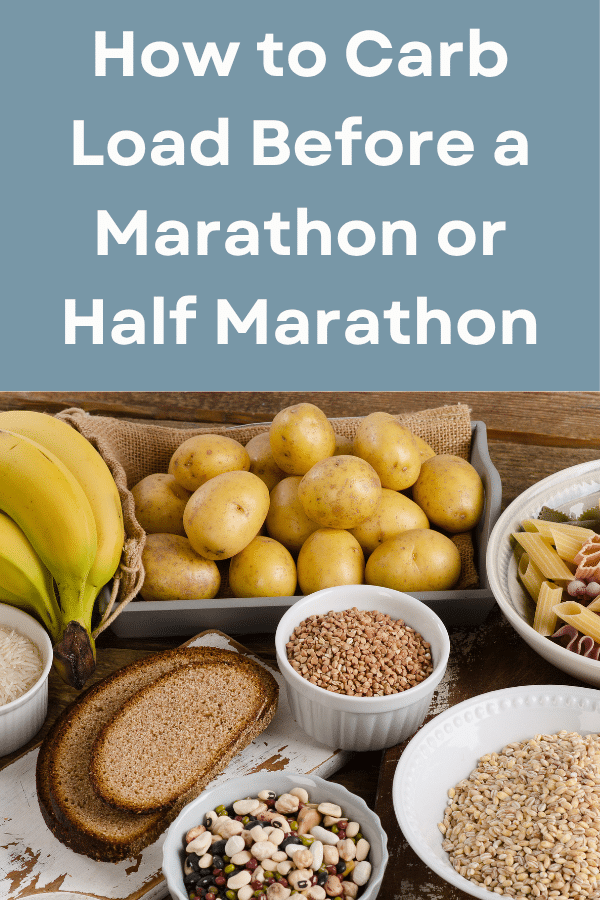
What is carb loading?
Carb loading is a nutrition strategy that helps endurance athletes maximize the amount of glycogen in their muscles before a long race. Glycogen is your body’s preferred source of energy during exercise (versus using fat or protein).
By increasing your carbohydrate intake in the days leading up to a race while reducing your training volume, your body stores more glycogen than it normally would. These extra energy reserves can help you perform well on race day.
Effective carb loading typically begins 2–3 days before race day and involves consistently eating carbohydrates throughout the day along with plenty of water. This approach allows your muscles to fully replenish their glycogen stores before you start your race.
Who Should Carb Load?
Carb loading is most beneficial for athletes participating in endurance events that last 90 minutes or longer. If you’ll be running a long distance race, starting the race with full energy stores can help you maintain your pace for longer.
You should consider carb loading if you are preparing for a marathon, half-marathon, ultra marathon, or another endurance event such as a triathlon.
For runners racing a 5k or 10k, carb loading is generally unnecessary. These shorter races rely primarily on the glycogen your body already stores through your normal daily diet. Instead, you can focus on eating balanced meals (with a focus on carbs that you know your body handles well), staying hydrated, and having a familiar pre-race meal the night before and the morning of the race.
It’s also important to remember that carb loading works best when it’s paired with a reduced training load during the final few days before your race. This should be happening as you are tapering for your race. As your mileage decreases during your taper, your muscles have the opportunity to replenish and store additional glycogen.
When should you start carb loading?
Carb loads usually start 2 to 3 days before a race. Some factors to consider are how long you will be racing and your weight. These factors impact how many carbs you need to store, and can in turn help you determine the length of your carb load.
When I am planning a carb load I like to use the calculator provided by Featherstone Nutrition. A couple of guidelines Meghann provides are that if you think you will have trouble increasing your carbs to do a 3 day carb load and that if the calculator is recommending >800 grams of carbs per day to try a 3+ day carb load.
To use the calculator, enter your age, height, weight, and choose your race/estimated time. Then you can choose your preference between a 2 and 3 day carb load. You can compare the results for each and decide which works better for you.
For example, if I am carb loading for a marathon I would either need 484 g of carbs per day over 3 days or 725 g of carbs per day over 2 days. The 3 day carb load sounds much more manageable and is what I usually do.
How many carbohydrates do you need?
While the calculator linked above can provide you with recommendations, if you are looking to fully load glycogen stores you would need 10-12 g/kg over 2 days or 8 g/kg over 3 days.
As I noted, I usually aim for about 480 g per day for 3 days leading into a marathon. This is harder to do then expected. It’s important to spread out meals and snacks throughout the day and always drink plenty of fluids which is needed to store carbs as glycogen.
What foods should you eat?
Aim to build most of your meals around carbohydrate rich foods while keeping fat and fiber moderate. This can help maximize your glycogen stores and reduce the risk of stomach issues on race day.
Grains and Starches
These are great sources of carbohydrates and can form the foundation of your meals.
- Pasta
- White or brown rice
- Bread, bagels, English muffins
- Oatmeal
- Cereal
- Pancakes and waffles
- Potatoes and sweet potatoes
- Pretzels
- Crackers
Fruit
Fruit provides carbohydrates but you should limit anything high in fiber as you get closer to race day.
- Bananas
- Apples
- Grapes
- Berries
- Oranges
- Applesauce
- Dried fruit
Easy Snacks
These snacks can help you meet your carbohydrate goals between meals.
- Granola bars
- Rice cakes with jam or honey
- Fig bars
- Graham crackers
- Applesauce pouches
Drinks
Fluids can also contribute to your carbohydrate intake while helping you stay hydrated and store glycogen.
- Sports drinks
- Fruit juice
- Smoothies
- Electrolyte drinks that contain carbohydrates
Foods to avoid before race day
As race day approaches, it’s important to reduce foods that are high in fat or fiber. These foods may increase the likelihood of GI issues while running. Here are some foods to avoid or limit in the days leading up to a race.
- Fried or greasy foods
- Heavy cream sauces
- Beans or lentils
- Very high-fiber cereals and breads
- Salads and vegetables (especially raw veggies)
- Spicy foods
- Alcohol
Try to stick with foods you’ve eaten during training that have worked well for you. Race week is not the time to experiment with new foods. Choosing familiar foods will help you feel your best and reduce the chances of GI issues before and during your race.
Example of foods to eat during a carb load
| Food | Serving Size | Approx. Carbs |
|---|---|---|
| Cooked pasta | 1 cup | 40–45 g |
| Cooked white rice | 1 cup | 45 g |
| Bagel | 1 medium | 50–55 g |
| Oatmeal | 1 cup cooked | 25–30 g |
| Potato | 1 medium | 35–40 g |
| Sweet potato | 1 medium | 25–30 g |
| Bread | 2 slices | 25–30 g |
| Banana | 1 medium | 25–30 g |
| Applesauce | 1 cup | 25–30 g |
| Sports drink | 20 oz (600 mL) | 30–35 g |
| Pretzels | 1 oz (28 g) | 22–25 g |
| Granola bar | 1 bar | 20–30 g |
| Pancakes | 2 medium | 35–45 g |
| Fruit juice | 8 oz (240 mL) | 25–30 g |
A simple rule during a 2–3 day carb load is to include a carbohydrate source at every meal and snack. For example:
- 1 bagel = ~55 g
- 1 banana = ~27 g
- 20 oz sports drink = ~32 g
- Total= ~114 g of carbohydrates
Common Carb Loading Mistakes to Avoid
Alot of runners don’t know how to carb load properly, especially if it’s their first race. Avoid these common mistakes to get the most out of your carb load.
1. Only focusing on carbs the night before a race.
One of the biggest myths about carb loading is that it means eating a huge pasta dinner the evening before your race. While a carbohydrate rich dinner can be part of your plan, your muscles need 2–3 days of increased carbohydrate intake to fully maximize glycogen stores.
2. Worrying About Weight Gain
As you store glycogen, your weight may temporarily increase. This is actually a good sign! By race day, your body is carrying the fuel it needs to perform at its best. As you run, you’ll gradually use those glycogen stores, and the associated water weight will naturally decrease. If this is a concern for you try to avoid getting on the scale in the days leading up to your race.
3. Choosing High-Fat Foods
Foods like pizza, burgers, creamy pasta dishes, and fried foods may contain carbohydrates, but they’re also high in fat, which slows digestion and can leave you feeling heavy or sluggish on race day.
4. Eating Too Much Fiber
High-fiber foods are healthy, but eating large amounts in the days before your race can increase the risk of bloating, gas, or frequent bathroom stops.
5. Forgetting to Hydrate
Glycogen is stored along with water in your muscles. If you’re dehydrated or not drinking enough fluids, your body won’t store glycogen as effectively. Remember to drink fluids consistently throughout race week and include some electrolytes.
6. Trying New Foods
Race week is not the time to try new foods. Stick with the foods you’ve practiced eating during your training cycle.
7. Ignoring Your Taper
Carb loading works best when your training volume decreases. Reducing your mileage while increasing your carbohydrate intake allows your muscles to fully replenish their energy stores before race day.
Final Thoughts on Carb Loading
Successful carb loading is about preparation and using a strategic approach to prepare your body for a long distance race. By starting your carb load 2 to 3 days before your race, choosing familiar foods, and staying hydrated, you’ll give your body the best chance to run strong on race day.
What challenges have you had with carb loading before a race?
You may also like:
Pre-Run Snack Ideas For Morning Runners
Is It Normal to Feel Worse During Taper? Marathon Taper Side Effects Explained
The Ultimate Guide to Preparing for a Long Run (Fueling, Gear & Mindset)

Now it’s time for the Runners’ Roundup! Link up your running and fitness posts below! Join myself, Coach Debbie Runs, Confessions of a Mother Runner and Runs with Pugs to post your favorite running tips, experiences, race and training recaps, workouts, gear, and coaching ideas.
Great information. Carb loading is one of my favorite parts of long distance running.
Carb loading is what it’s all about! Thanks for sharing some great ways to make it more effective!