Plyometric exercises for runners can be a useful addition to a training plan by helping to develop explosive power, improve running economy, and increase overall fitness. These exercises involve quick, powerful movements such as jumping, hopping, and bounding. They train your muscles and tendons to produce force more efficiently, which can translate into a stronger stride and better performance.
The key is incorporating plyometrics strategically. Adding in too much too soon can increase injury risk, but a well-planned approach can complement your running and other workouts. Let’s discuss the benefits of plyometric training for runners, the best exercises to include, and how to safely add them to your running routine.
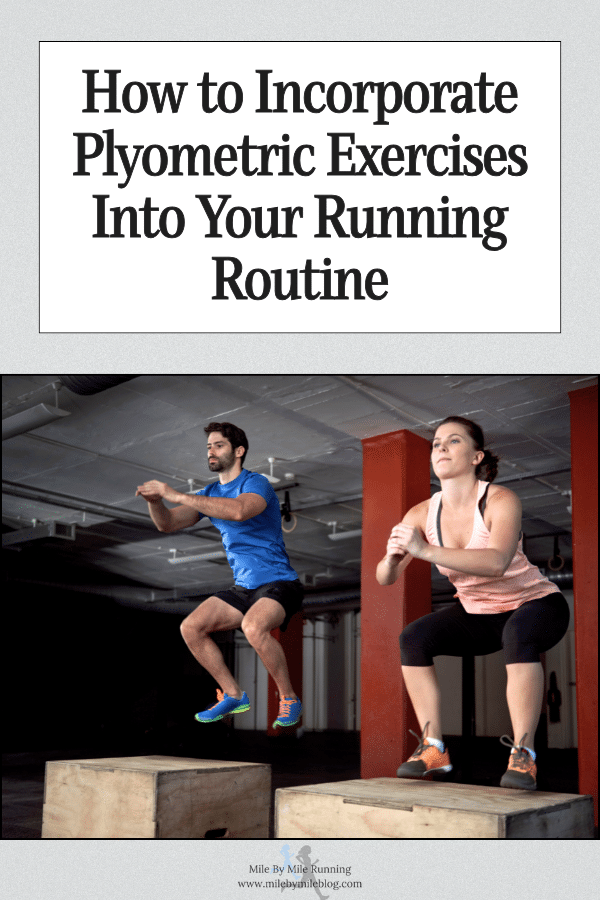
What Are Plyometric Exercises?
Plyometrics are explosive exercises that train your muscles to generate force quickly. They involve a rapid stretching of a muscle followed immediately by a powerful contraction, a process known as the stretch-shortening cycle. They can help improve how efficiently your muscles, tendons, and nervous system work together in this process.
When your foot hits the ground while running, your muscles and tendons briefly store energy before releasing it to propel you forward. Plyometric training improves your body’s ability to store and release that energy efficiently, helping you run faster and with less effort.
Benefits of Plyometric Training for Runners
Plyometrics can be beneficial to runners in several different ways. They can help increase running power and improve running economy. They can also help to improve speed, balance, and coordination. Additionally, if used properly they could even help with resilience to prevent injuries.
Who Should Add Plyometrics to Their Running Routine?
Plyometrics can be helpful for any runner, but it’s important to already have a consistent training base in place.
If you are looking to improve speed or running economy it’s worth considering adding in plyometrics. They can be helpful in preparing for races from the 5k all the way up to the marathon (or longer).
It’s also worth noting that plyometrics should be used after a strength routine is in place. They compliment other strength exercises well, but you will want to be comfortable with the basics first.
When to Include Plyometric Workouts in Your Training Schedule
Plyometrics place significant stress on muscles and tendons, so its important to do them when you are feeling relatively fresh. They can be completed before a hard run or before a strength session. A dynamic warm up should be completed first.
Start with 1 session per week of 2-3 exercises. You can progress to 2 sessions per week once you are comfortable with the exercises. During a training block you can continue using plyometrics but may reduce the sessions, exercises, or sets.
The Best Plyometric Exercises for Runners
Jump Squats
Start by standing with your feet shoulder width apart, core engaged, and chest upright. Lower into a squat, and explosively jump straight up. Drive through your feet and swing your arms upward to propel yourself into the air. Extend your hips, knees, and ankles completely at the top of the jump. When you land, touch down lightly on the balls of your feet and immediately bend your knees to absorb the shock.
Bounding
Start in an athletic stance, leaning your torso slightly forward, engaging your hips and glutes. Explosively push off the ground using your back leg, extending fully through your ankle, knee, and hip to create maximum power. Drive the knee of your free leg up to about a 90-degree angle while swinging the opposite arm forward for momentum. Land flat-footed or on the ball of your foot and keep your foot strike directly underneath your hips to absorb the impact. Start the next bound right away by driving off the leg you just landed on.
Box Jumps
Stand facing a sturdy plyo box at a distance where your arms can reach forward and fingertips lightly touch the edge (about 1 to 1.5 feet). Set your feet hip width to shoulder width apart, ensuring your toes are pointed straight ahead. Push your hips back and bend your knees into a quarter-to-half squat position which reaching your arms behind you.
Jump upward to the box by rapidly extending your hips, knees, and ankles. Swing your arms forcefully upward and forward to propel your body into the air. Bring your knees toward your chest to help clear the height of the box. Land softly in the middle of the box with both feet at the same time. Your landing stance should closely mirror the stance you had when you started the jump.
Skater Jumps
Stand on one leg in a half-squat or athletic stance with your chest up and core engaged. Cross your free leg slightly behind you. Push off explosively through the glute of your standing leg to jump laterally to the opposite side. Use your arms to drive momentum. Land softly on the ball of your opposite foot. Allow your knee and hip and let your trailing leg sweep behind you. Immediately push off your new standing leg to jump back to the starting side.
Single-Leg Hops
Stand tall on one leg with a slight bend in the knee and hip. Propel yourself upward primarily using your ankle and calf. Keep your opposite leg bent or tucked behind you and bounce continuously. Land lightly on the ball of your foot with a soft knee. Pump your arms in a running or jumping motion.
Final Thoughts on Adding Plyometrics to Your Running Routine
Plyometric training can be a valuable addition to a runner’s training plan when used strategically. By incorporating explosive movements such as jumps, hops, and bounds, runners can develop greater power, improve running economy, and build the strength needed to run more efficiently. These benefits can lead to better race performances.
Have you ever used plyometrics in your training?
You may also like:
How to Structure Marathon and Half Marathon Training for Long-Term Progress Why Tempo Runs Matter and How to Add Them to Your Training
How to Build Mental Strength Throughout Your Training Cycle

Now it’s time for the Runners’ Roundup! Link up your running and fitness posts below! Join myself, Coach Debbie Runs, Confessions of a Mother Runner and Runs with Pugs to post your favorite running tips, experiences, race and training recaps, workouts, gear, and coaching ideas.
This is a great reminder, Lisa! I’ve noticed that as I age, I’m losing a lot of that “explosiveness”. Doing plyometrics will help to slow the decline and sharpen what is still there.
We need to expose our system to fast, elastic loading!
So many great ideas to add plyometrics to your routine. And perfect timing too. I keep telling my husband that we need to do this to battle the dragging feet syndrome. 🙂
Oh I do like these from time to time. I had just nailed box jumps before breaking my ankle, and I just haven’t been brave enough to try again. I should just get over it.