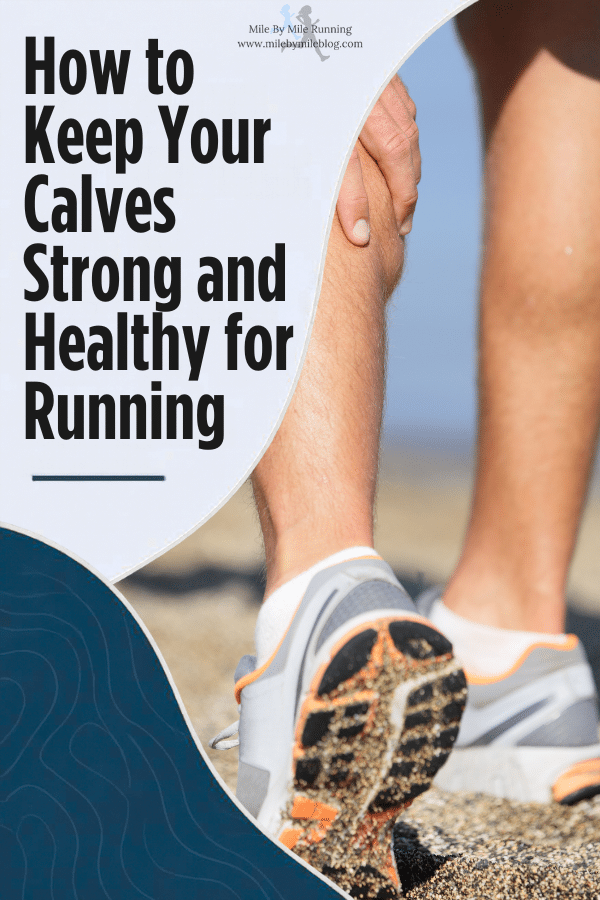
Your calves are an important muscle group when it comes to running . They help absorb impact and provide the power needed to push off the ground. Because they work so hard, any issues can contribute to discomfort and running injuries.
Incorporating calf-strengthening exercises and mobility can help your calves handle the demands of running. Here’s how you can care for your calves so you can keep running strong.
Why Are Strong Calves Important for Runners?
There are two primary calf muscles, the gastrocnemius and soleus, which work together to help propel you forward and control your landing.
Your calves help generate force as you push off the ground, contributing to forward movement. They stabilize and control the ankle as your foot strikes the ground and moves through the running gait cycle.
The calf muscles, particularly the soleus, help absorb and manage some of the forces created when your foot lands. Additionally, the Achilles tendon, which connects the calf muscles to the heel, stores elastic energy during the landing phase and releases it during push-off. This helps make running more efficient.
Strong, well-functioning calves help maintain proper ankle and foot mechanics, especially as you become fatigued during a long run. Beyond just preventing injuries, calf training can also support running efficiency, power, and endurance.
What Causes Calf Pain and Tightness in Runners?
Sometimes calf tightness is simply due to muscle fatigue, while in other cases it can be the sign of an injury or an underlying problem. A sudden increase in mileage, long-run distance, speed work, or hill running can place more stress on the calf muscles than they’re prepared to handle. As the calves become fatigued, particularly during long runs, they may feel tight, heavy, or sore.
Faster running requires the calf muscles and Achilles tendon to produce and absorb more force. Adding intervals, tempo runs, or sprints can therefore increase calf soreness. Running uphill requires the calves to work harder, while downhill running increases the muscles’ workload as they help control your descent.
If the calf muscles aren’t strong enough to handle the demands of your training, they may fatigue prematurely and become tight or painful.
Switching to a shoe with a different heel-to-toe drop, cushioning, or structure can change the demands placed on your calves. Moving suddenly to a lower-drop shoe, for example, may increase calf and Achilles loading. Suddenly doing more running on hills, trails, uneven terrain, or harder surfaces can alter the workload placed on the calves.
Additionally, restricted ankle dorsiflexion can change how the ankle and lower leg move during running and may cause the calf muscles to work harder.
Changes in cadence, stride, foot strike, or overall mechanics can alter how much work the calves are doing. This can sometimes happen when a runner deliberately changes their form or when fatigue causes their mechanics to change.
How to Strengthen Your Calves for Running
There are many ways to do calf raises to target different parts of your lower leg, as well as ways to increase the difficulty of the exercises.
Basic calf raises involve standing on both feet, raising your heels so you are on your toes, and lowering back down. You can also do single leg calf raises by only standing on one leg at a time while doing this exercise.
To allow for more range of motion, place your toes on a step and then lower up and down. You can also bend your knee to target a different area of your leg, the soleus.
To make any of these exercises more challenging you can make them eccentric by lowering slowly for about 3 seconds and then raising back up as your normally would. (You can raise back up on both feet). This teaches the muscles and tendons to lengthen under a heavy load.
Last year my PT taught me a isometric soleus exercise to build strong calves for endurance running. You sit on a chair or bench with your knees bent and place a heavy weight on your thighs. Raise your ankles, and hold for 30-60 seconds, and repeat for a total of 6-8 reps.
Calf Mobility and Stretching for Runners
While stretching alone is unlikely to fix any calf issues, it can be helpful to ensure you have enough range of motion. If your calves are sore, it may also just feel good to stretch!
Some helpful exercises include standing calf stretches, bent-knee calf stretches, ankle circles, and knee-to-wall ankle mobility drills. Straight-knee stretches target the gastrocnemius, while bent-knee stretches focus more on the soleus. Ankle mobility drills help improve dorsiflexion, allowing your knee to move forward over your foot.
Try incorporating dynamic mobility exercises into your warm-up and gentle calf stretches after your runs. Foam rolling may also help temporarily relieve feelings of tightness. Aim for gentle, controlled movements rather than forcing a stretch.
Should you stop running if you have calf pain?
Whether you should stop running with calf pain depends on the severity of the pain and what is causing it. Mild muscle tightness may improve with a warm-up or rest, but pain that worsens during a run can be a sign that your calves are struggling to handle the training load.
It’s smart to stop running if you experience sharp pain, limping, weakness, or pain that changes your running stride. Continuing to run through an injury can make recovery take longer.
If you experience mild tightness that improves as you warm up, doesn’t affect your stride, and doesn’t worsen during or after your run, you may be able to continue at an easier effort. Monitor your symptoms closely and take a rest day if the discomfort persists or returns.
If calf pain continues, worsens, or keeps returning during your runs, take a break from running and consider seeing a healthcare professional, such as a sports medicine physician or physical therapist.
Seek urgent medical attention if you develop sudden, severe calf pain or a calf that is swollen, warm, red, or tender as these symptoms can indicate a blood clot.
Remember that it’s better to miss a couple of runs than to get sidelined with a long-term injury!
How do you keep your calves healthy and strong for running?
You may also like:
Back Care for Runners: How to Prevent and Manage Back Pain
Posterior Tibial Tendonitis (PTT) Recovery Plan
5 Reasons Foot Injuries are the Worst
Now it’s time for the Runners’ Roundup! Link up your running and fitness posts below! Join myself, Coach Debbie Runs, Confessions of a Mother Runner and Runs with Pugs to post your favorite running tips, experiences, race and training recaps, workouts, gear, and coaching ideas.
Great tips! Runners usually have such nice looking calves we forget that we still need to strengthen them.